Diversification has long been regarded as one of the core principles of portfolio construction. The idea is straightforward: spread capital across different investments and portfolio risk should be reduced.
In practice, however, diversification is often misunderstood.
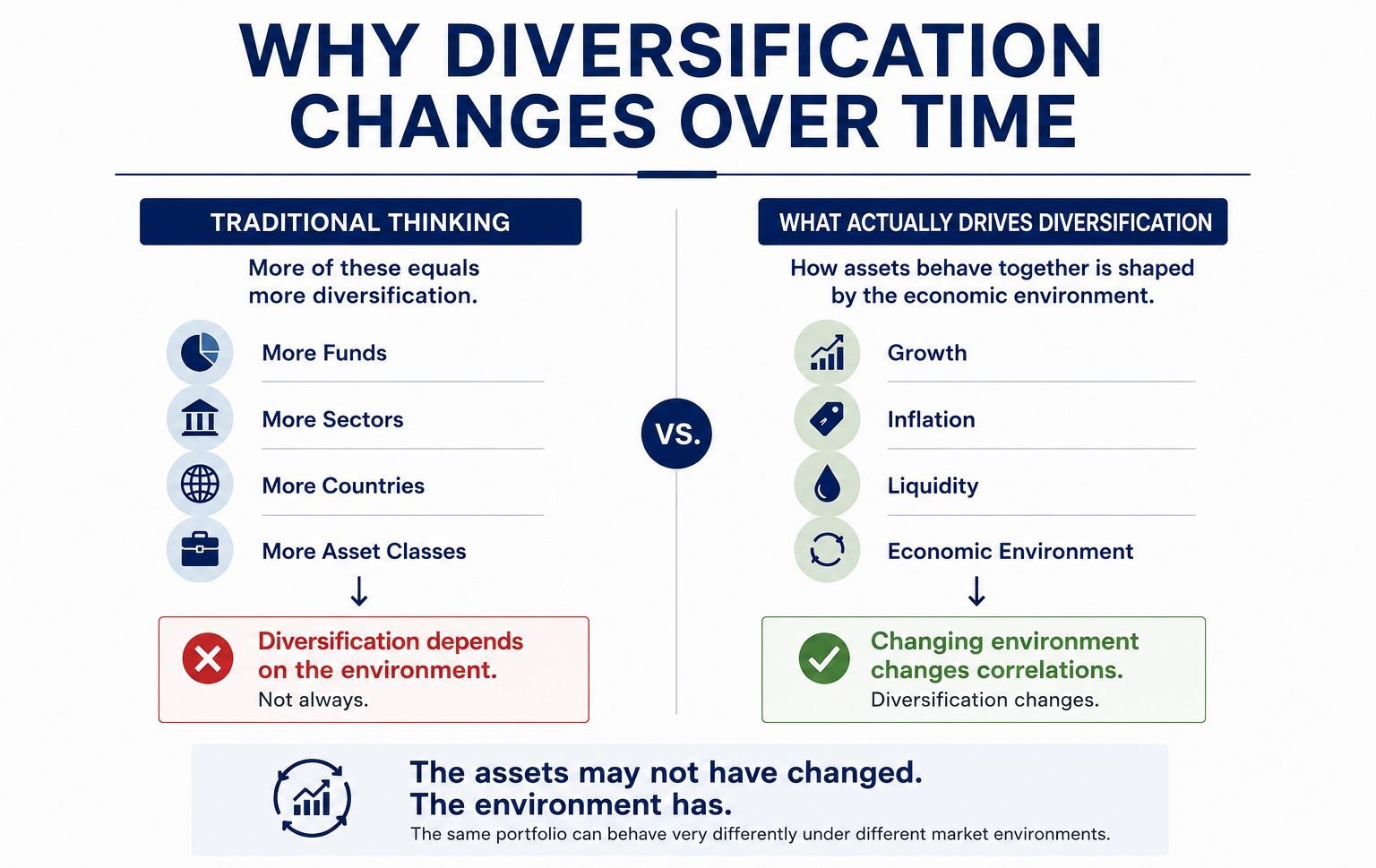
Many investors assume diversification is simply a function of the number of holdings within a portfolio. More funds, more sectors, more countries and more asset classes are often viewed as evidence of a diversified approach. While these things can help, they do not necessarily guarantee diversification when it matters most.
The reason is that diversification is not really about the number of positions held. It is about how those positions behave relative to one another.
For long periods, assets can appear diversified. Then conditions change and relationships between those assets begin to shift. Investments that previously moved independently can suddenly start moving in the same direction, often at the exact moment investors were expecting diversification to provide protection.
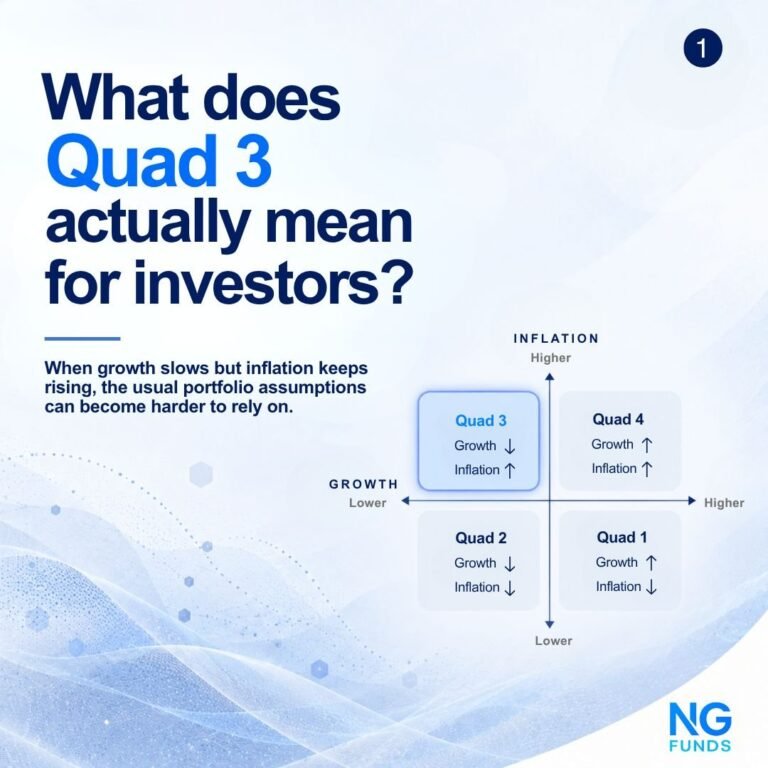
Recent years have provided several examples. Many investors had become accustomed to bonds acting as a counterbalance to equity risk, yet when inflation became the dominant market driver that relationship changed and portfolios that appeared diversified under one environment behaved very differently under another.
This highlights an important point: diversification is not static.
The relationships between assets are influenced by growth, inflation, liquidity and the broader economic environment. As those factors change, correlations can change as well. A portfolio that appears diversified during a period of falling inflation and abundant liquidity may behave very differently during a period of persistent inflation or slowing growth.
The assets themselves may not have changed, but the environment has.
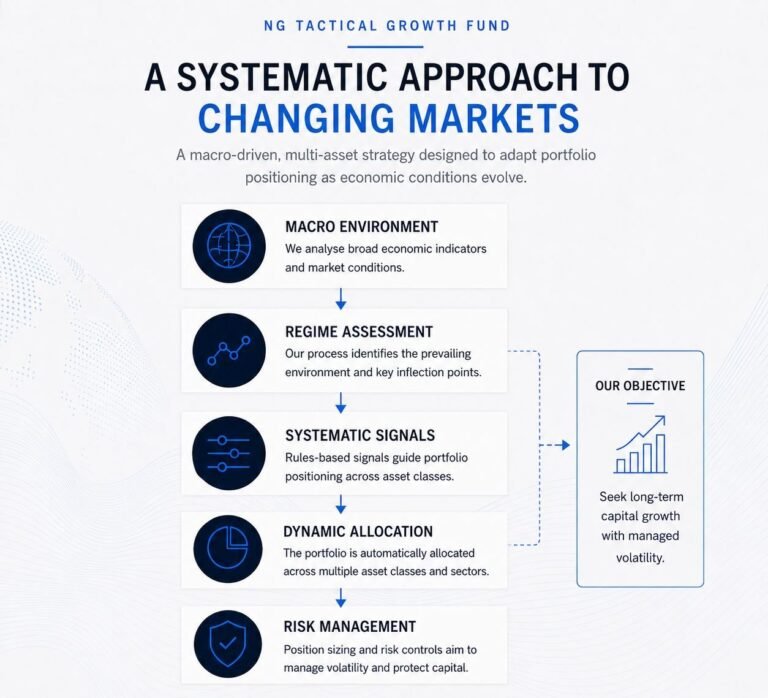
This is one reason many institutional investors spend as much time analysing economic conditions and market regimes as they do selecting individual investments. The objective is not simply to own different assets. The objective is to understand how those assets may behave together under different environments.
Diversification remains an important principle in portfolio construction. However, the effectiveness of diversification ultimately depends on the environment in which it is being measured. As conditions change, relationships between assets can change as well.
Understanding those relationships may be just as important as selecting the assets themselves.