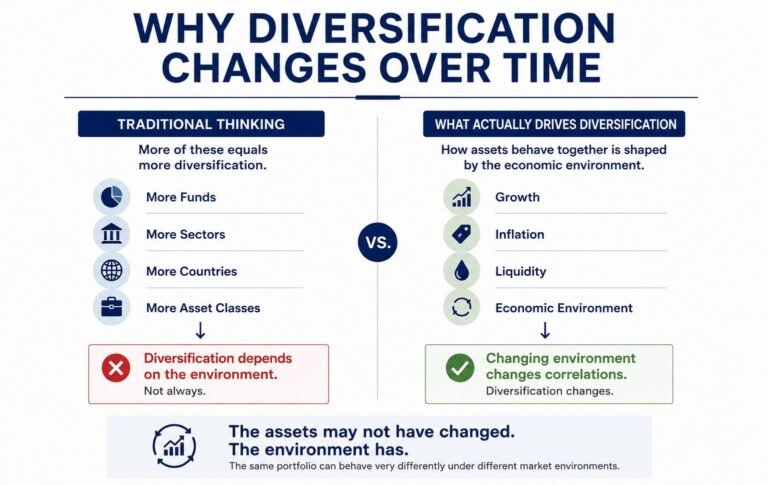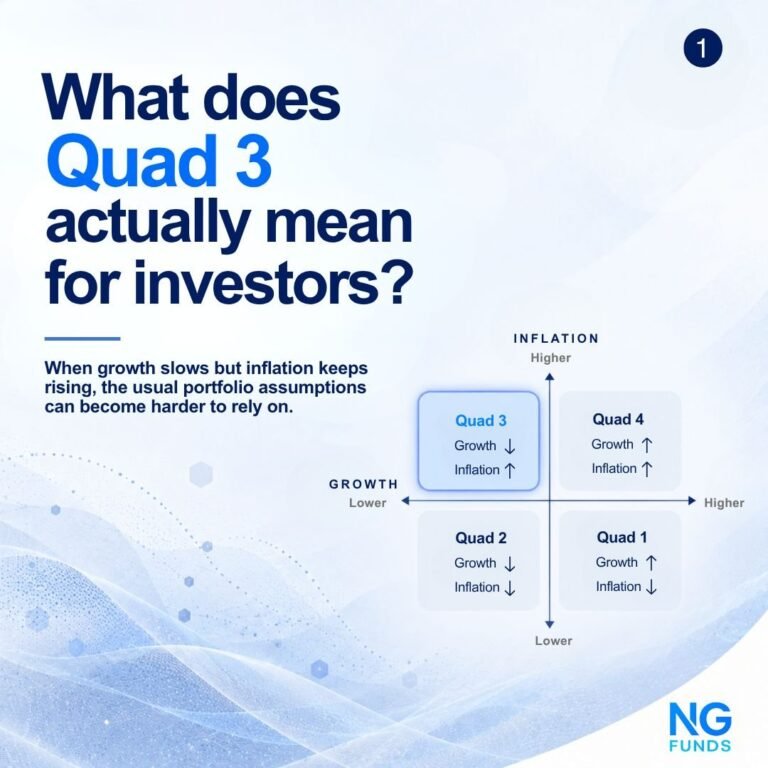
The traditional 60/40 portfolio was built around a relationship between stocks and bonds that held for much of the past.


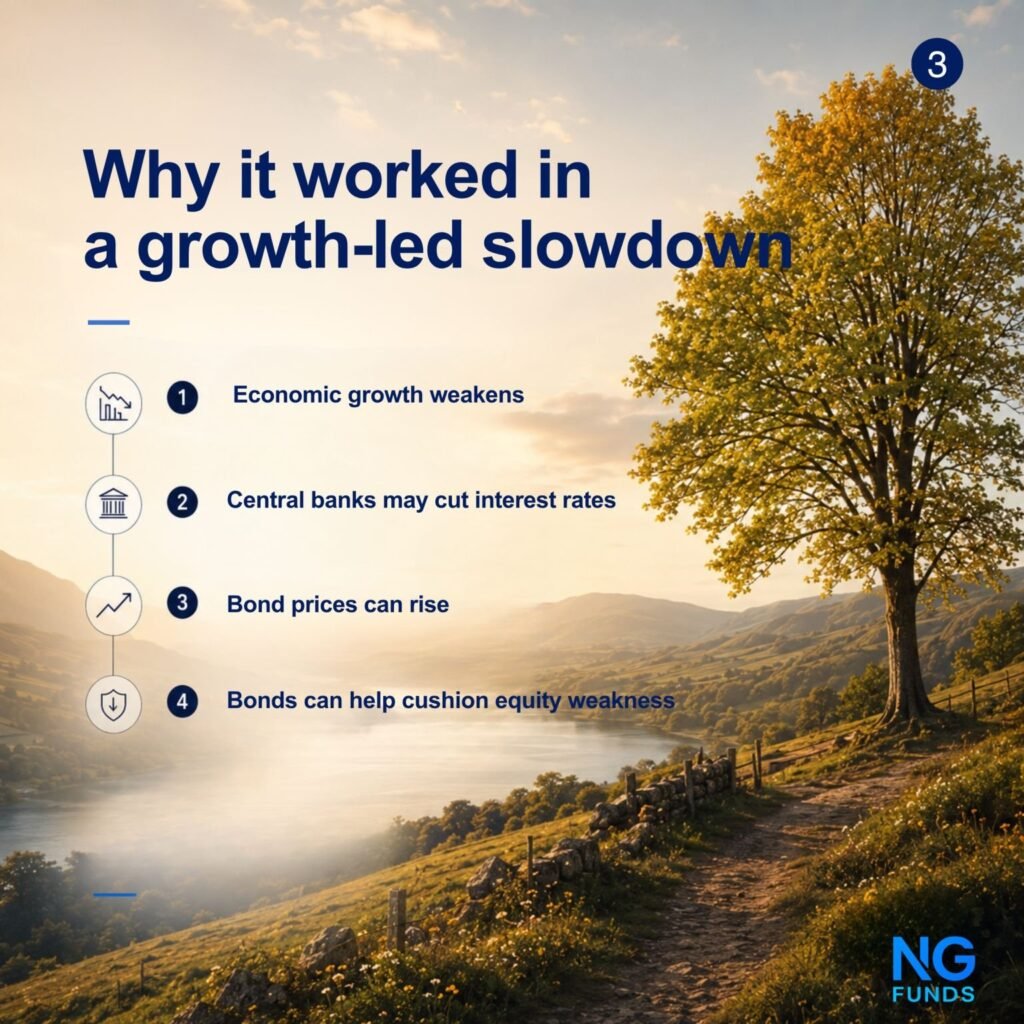

When economic growth weakened, central banks often had room to reduce interest rates. Bond prices could rise, helping to cushion equity market weakness and supporting balanced portfolios.
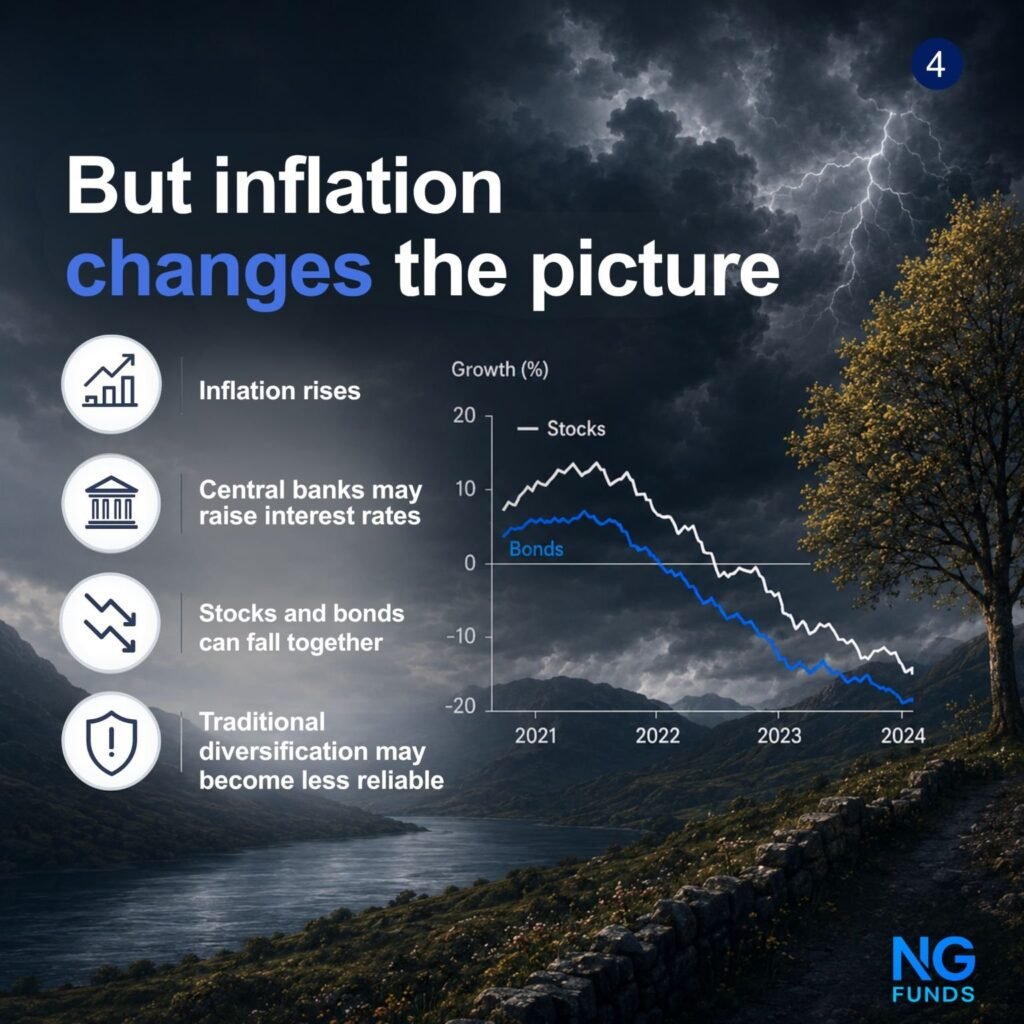
That relationship can change when inflation becomes the dominant market driver. As interest rates rise to combat inflation, stocks and bonds can come under pressure at the same time, making traditional diversification less reliable.
The key takeaway isn’t that the 60/40 portfolio was wrong, or that bonds no longer have a role. It’s that the behaviour of different asset classes depends on the wider market environment.
This is why NetGrowth Funds uses a systematic, rules-based investment process that adapts as market conditions change, recognising that different asset classes perform differently under different economic conditions.
The aim is not to predict what happens next, but to respond to what is happening now.