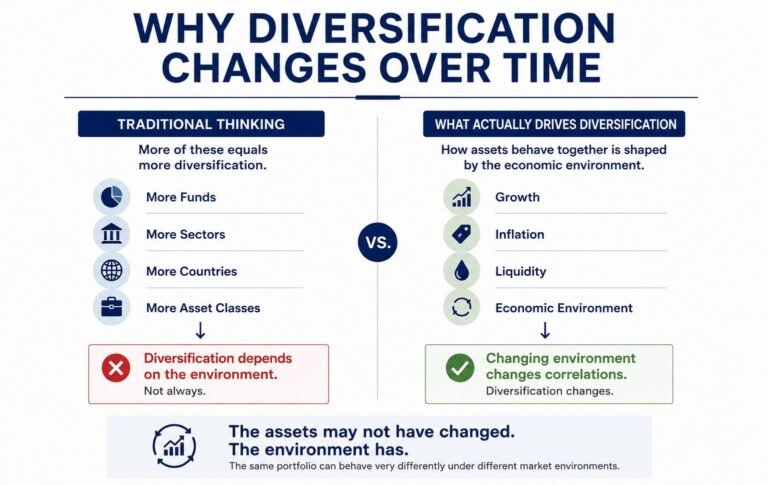
Why do investors often become heavily concentrated in assets that have performed well… only to struggle when conditions change?
Markets do not operate within a single environment.
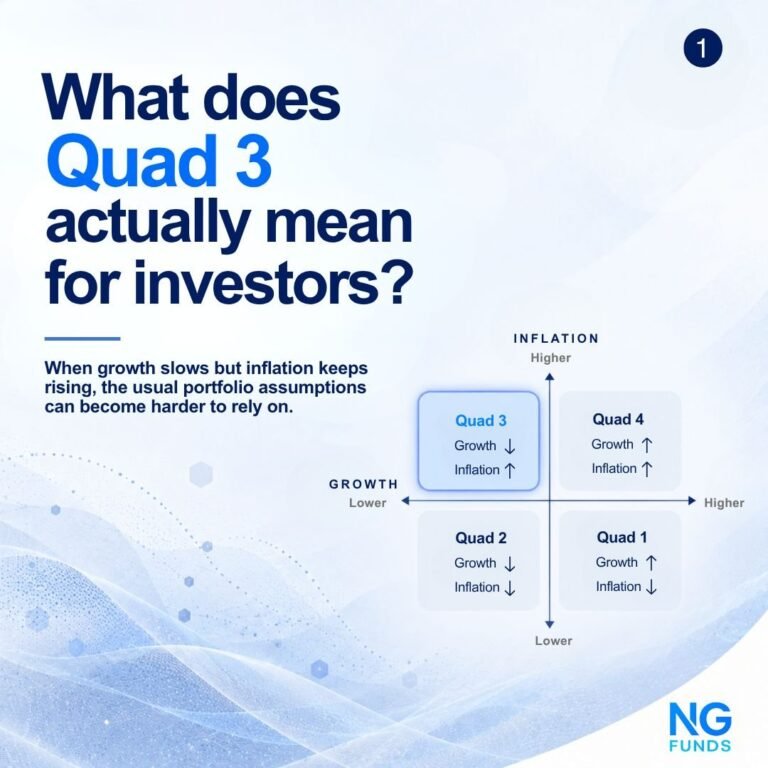
Growth accelerates or slows. Inflation rises or falls. Liquidity expands or contracts.
Yet portfolios are often built around recent winners, encouraging the belief that what has worked over the last few years will continue to work indefinitely.
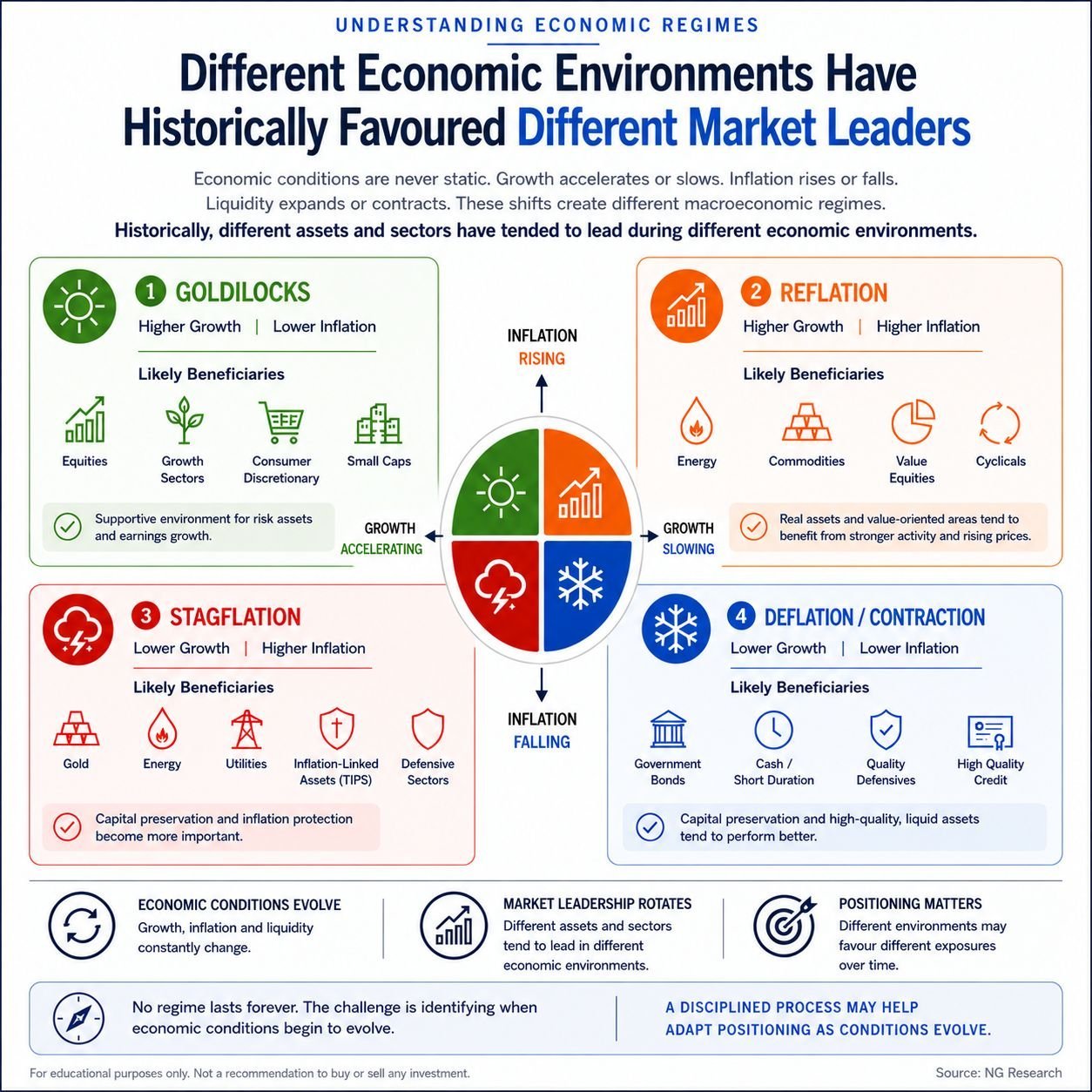
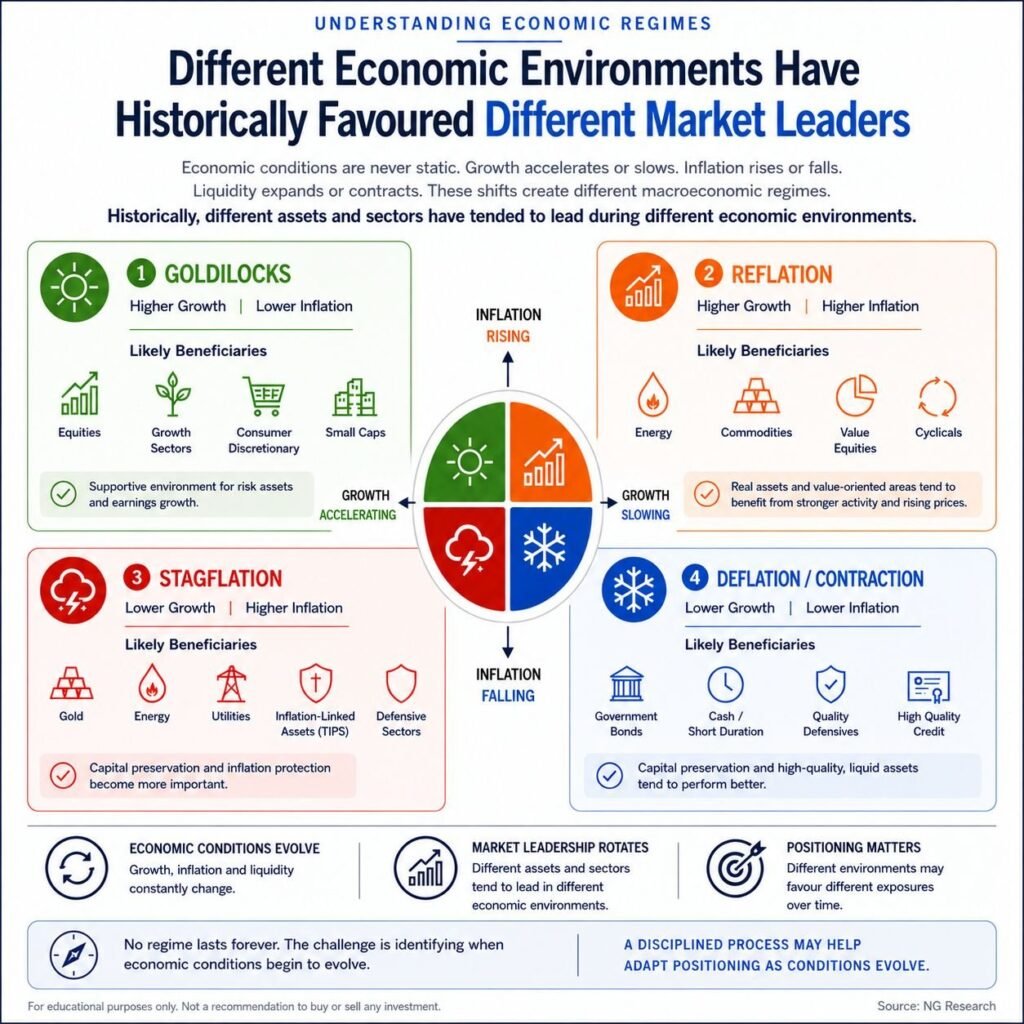
Historically, different economic environments have tended to favour different areas of the market. Periods characterised by stronger growth and moderating inflation have often been associated with leadership from equities and growth-oriented sectors.
By contrast, environments marked by persistent inflation, slowing growth or tightening liquidity have historically tended to favour very different assets, including commodities, defensive sectors, gold or fixed income.
This helps explain why market leadership rotates over time. Positioning suited to one environment may not necessarily remain effective in another.
It is one reason many institutional and macro-driven investors spend significant time analysing economic regimes rather than focusing solely on individual assets.
No regime lasts forever. The challenge is recognising when the environment begins to change.
We’ve put together a simplified overview below showing how different economic environments have historically been associated with different areas of market leadership.