“Systematic investing” is a phrase used regularly across the investment industry, yet it is often misunderstood.

For many, the term immediately suggests algorithms replacing people or fully automated trading systems operating without oversight. In practice, the principle is often simpler.
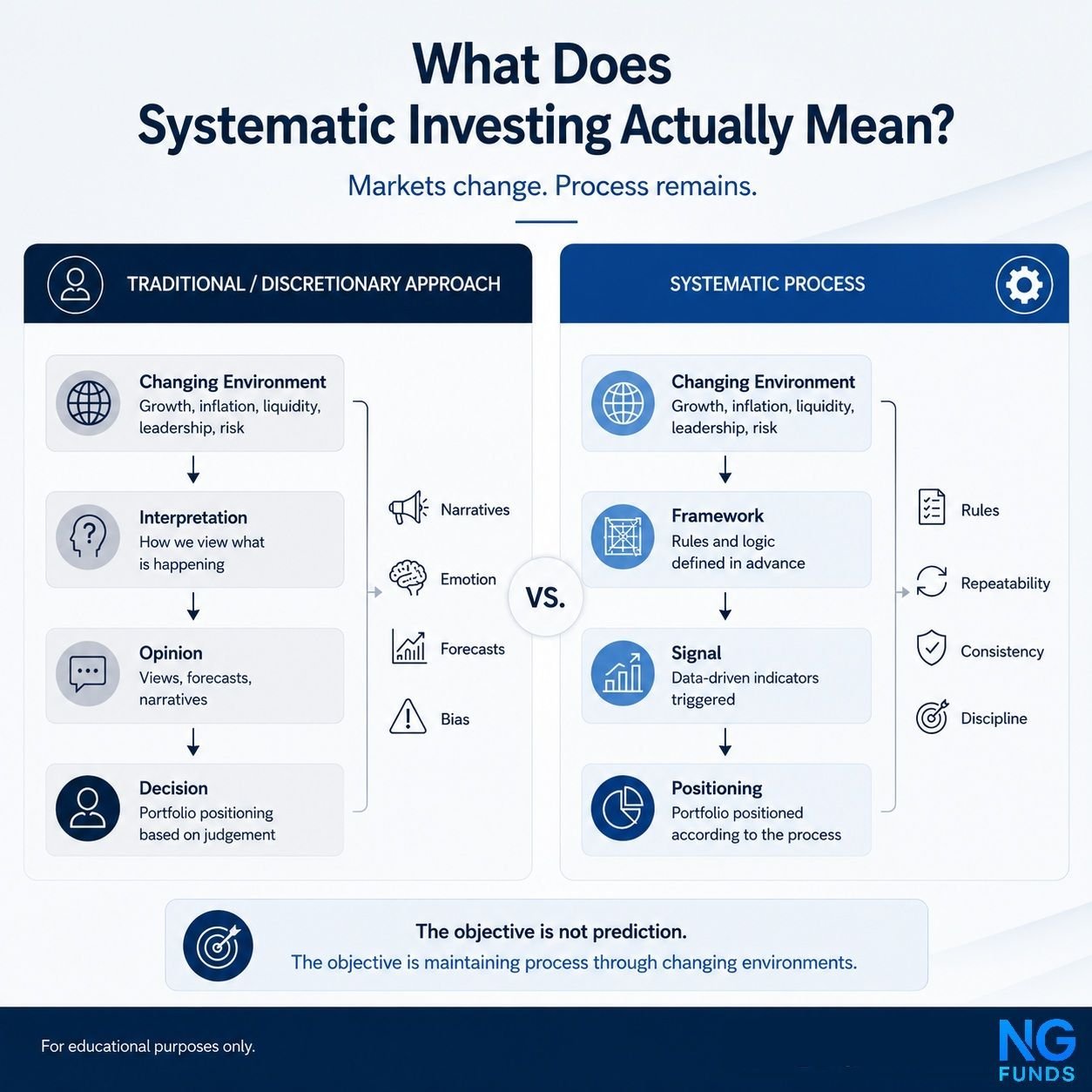
Systematic investing is about building a repeatable process designed to respond to changing market environments using predefined frameworks, signals and rules. Traditional investing can often rely more heavily on forecasts, opinions or discretionary decisions. Systematic approaches attempt to address a different challenge:
How can investment positioning remain consistent as conditions evolve?
Because conditions do evolve.
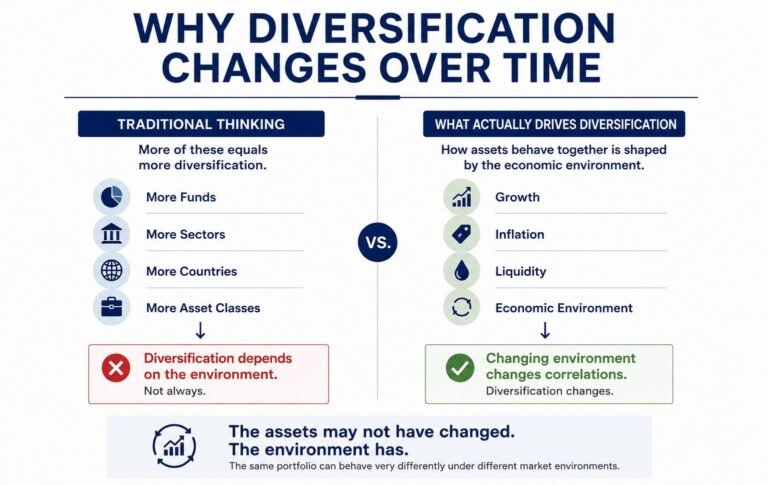
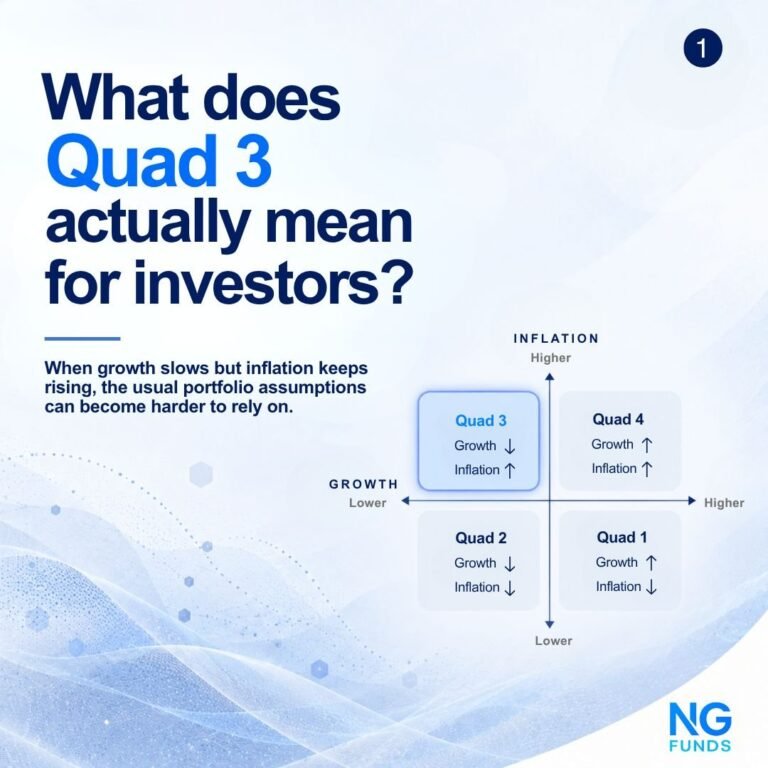
Growth accelerates or slows. Inflation rises or falls. Liquidity expands or contracts. Market leadership rotates over time.
Historically, different environments have tended to favour different assets, sectors and styles of investing. The challenge is not simply identifying opportunities. The challenge is recognising when the environment itself begins to change.
Systematic processes attempt to address this by allowing positioning to be guided by predefined frameworks rather than short-term narratives or discretionary judgement. That does not mean uncertainty disappears, markets become predictable or every decision proves correct.
The objective is different.
The objective is maintaining consistency, repeatability and discipline through changing environments.
A simplified comparison may look something like this:
– Traditional approach:
Changing environment → Interpretation → Opinion → Decision
– Systematic process:
Changing environment → Framework → Signal → Positioning
The distinction may appear small, yet over long periods it can materially alter how portfolios respond across different regimes.
This is one reason systematic frameworks are widely used among institutional investors, quantitative strategies and macro-driven asset managers. Not because systems guarantee better outcomes, but because repeatability and discipline may become increasingly important when environments become less predictable.
As economic conditions evolve, the importance of process may increase. Because if environments change over time, an important question follows:
How should investment positioning respond?